Grades, the curriculum and standardised tests always come first. Every top university says so. The real question is what comes on top of them, and there the admissions offices make a distinction most families never hear about: super-curricular is not the same as extra-curricular.
Two words, two very different things
Cambridge puts it in one line. After listing the ways a student can explore a subject beyond school, including "academic competitions or projects", it says: "We call these types of activities super-curricular activities. Super-curricular is different to extra-curricular."
Extra-curricular activities are activities or interests you do outside of school that are unrelated to your chosen subject, such as playing sports or an instrument. These activities won't be taken into consideration by Cambridge during the application process.
University of Cambridge, "Improve your application"
Oxford uses the same idea: "Supercurricular learning involves exploring the subjects that interest you beyond what you study at school." And UCAS, from 2026 entry, asks every applicant the question directly: "What else have you done to prepare outside of education, and why are these experiences useful?"
- Extra-curricular: your interests outside school, unrelated to the subject you will study. Good for you. Cambridge does not count it.
- Super-curricular: going further into your subject than school takes you, by your own choice. This is what admissions tutors read.
Why FTC at the highest level is super-curricular
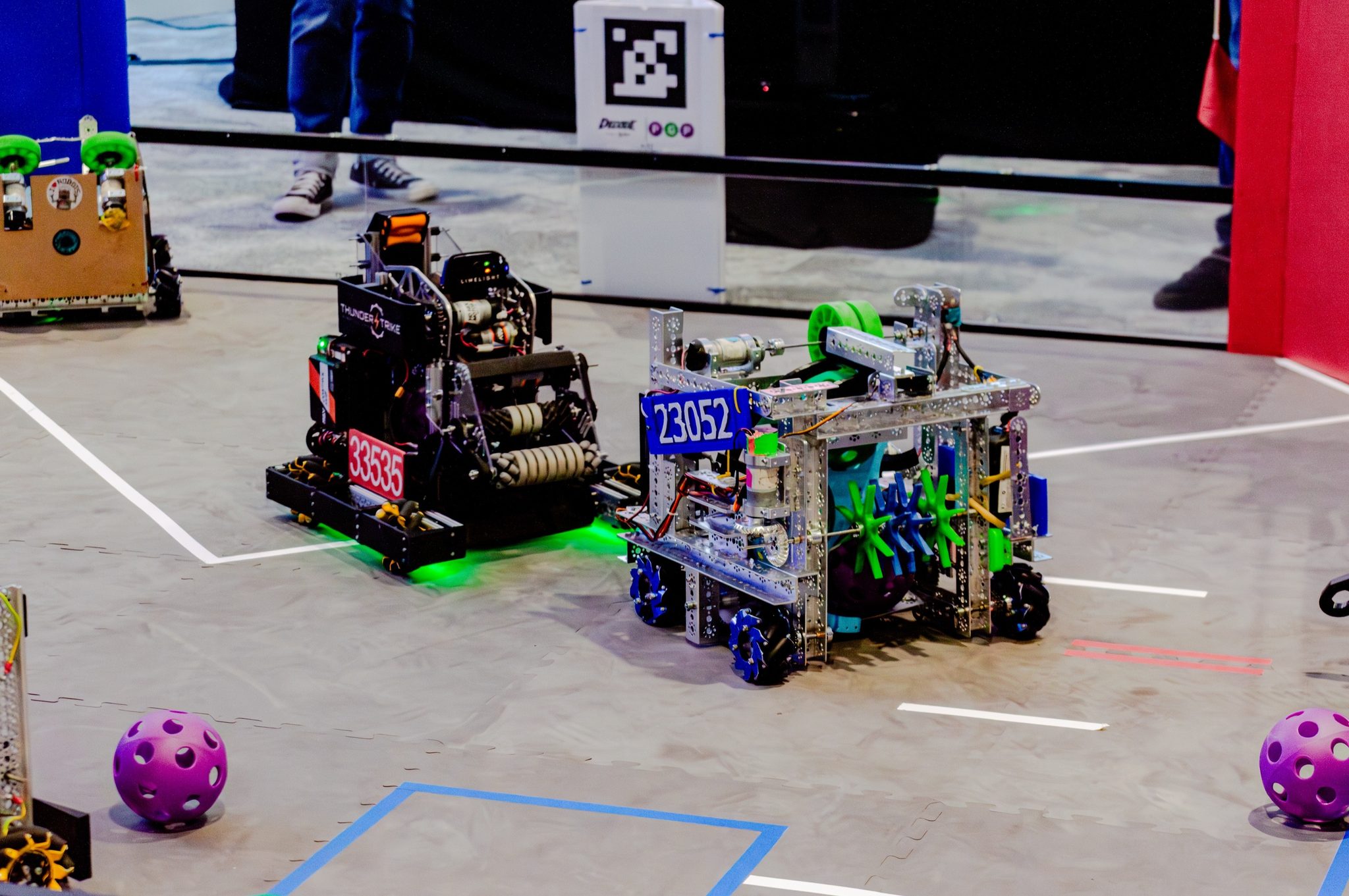
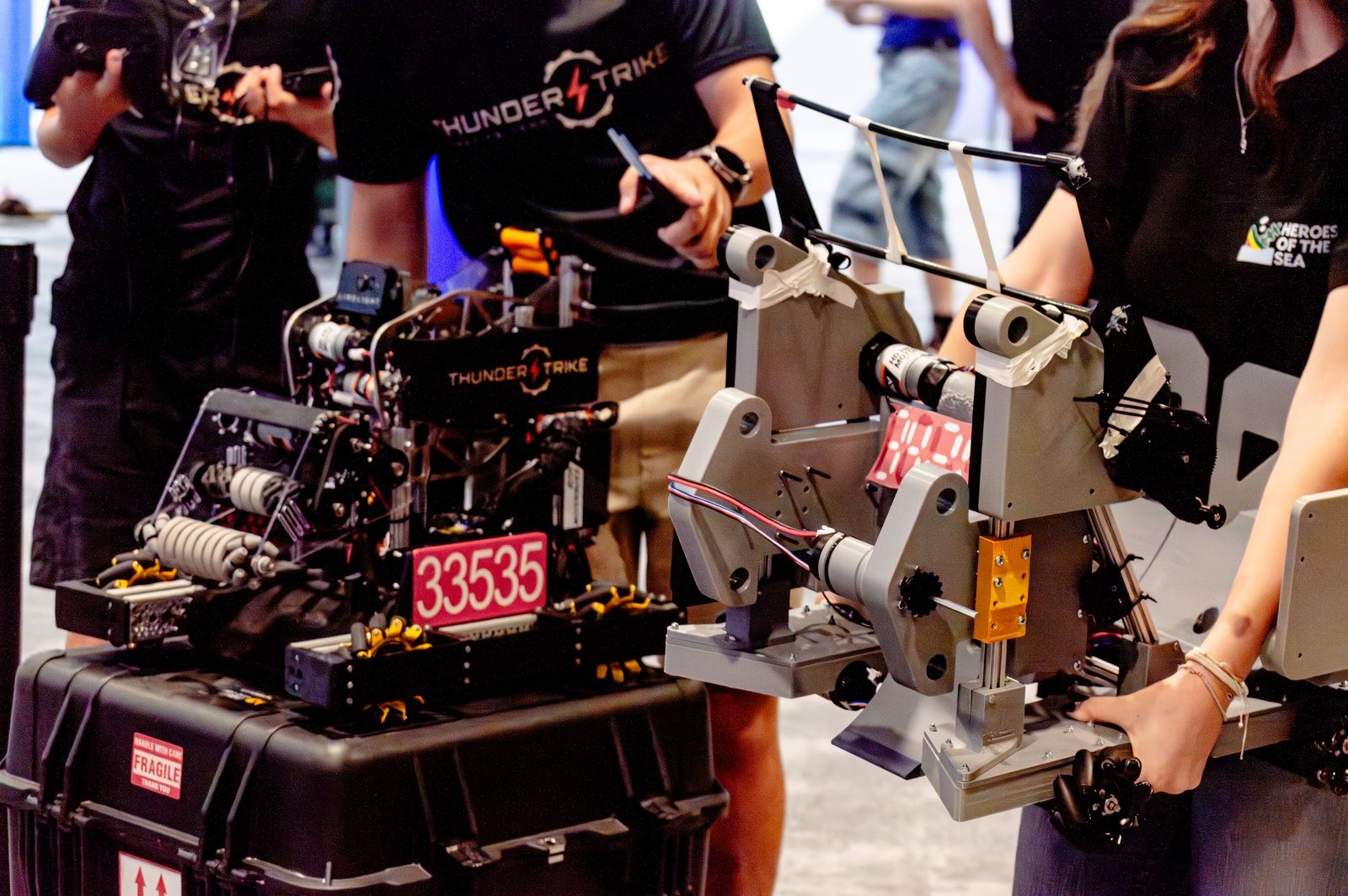
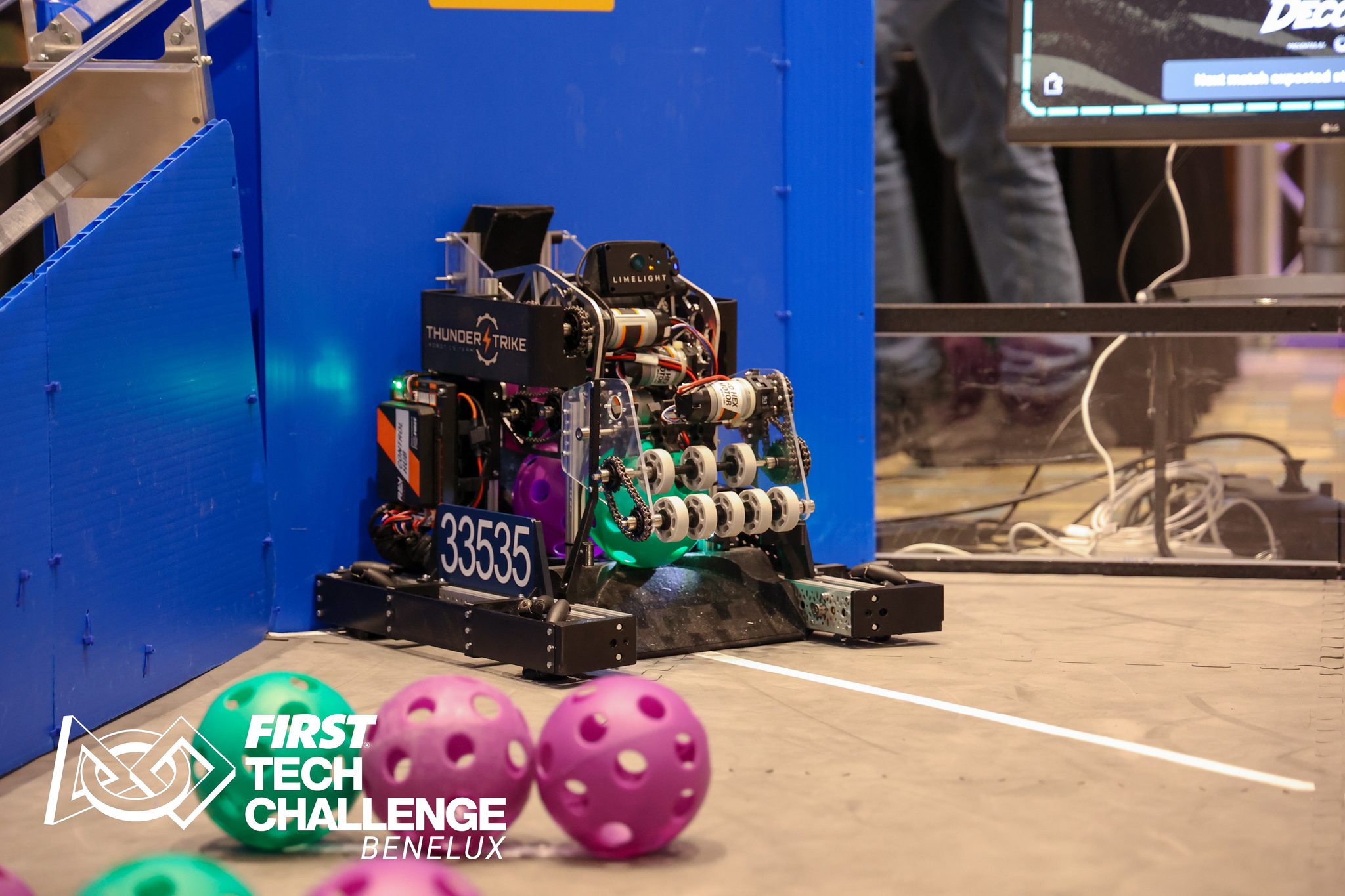
For a student heading for engineering, computer science, physics or maths, a FIRST® Tech Challenge season is the subject itself, taken further than any school takes it. The team designs, builds and codes a competition robot from nothing, against a deadline, and puts it up against the best teams in Europe.
- Maths and physics, applied. Every movement of the robot is a calculation that has to work in the real world, not only on paper.
- Software that runs alone. Computer vision and fully autonomous routines: the robot plays the first part of every match with nobody driving.
- Engineering, documented. Each team writes an engineering portfolio of its design decisions and testing, and expert judges assess it at every event.
- Results on the record. Rankings and awards at international events, against teams from across Europe.
This is the difference between a hobby and super-curricular work. A robotics hobby is extra-curricular. A season at the highest level of FTC, owning a real part of the robot and defending your design to judges, is your subject, explored far beyond school.
What makes it count in an application
Admissions tutors want to know what you learnt, not what you joined. Oxford's Engineering Science department tells applicants they could write about a hobby, "maybe you've built a robot", as long as they say what they enjoy about it and which engineering principles they learned. A full FTC season gives a student exactly that, and the evidence to back it:
- A role you own. A subsystem, the code, the engineering portfolio. Something with your name on it.
- A full season, not a weekend. Months of design, testing, failure and improvement.
- Work you can show. Portfolio pages, design decisions, match results.
- Someone who saw you do it. A mentor who can write about your specific role.
Universities that already know FIRST®
MIT admissions estimates that 15 to 20 percent of its undergraduates did FIRST®. Cambridge hosted the FTC UK National Championship in 2023 and 2024. TU/e, Eindhoven's university of technology, is a main partner of FTC Benelux, the league we compete in. MIT, Yale, RPI and Olin are Platinum FIRST® scholarship providers.
How we do it
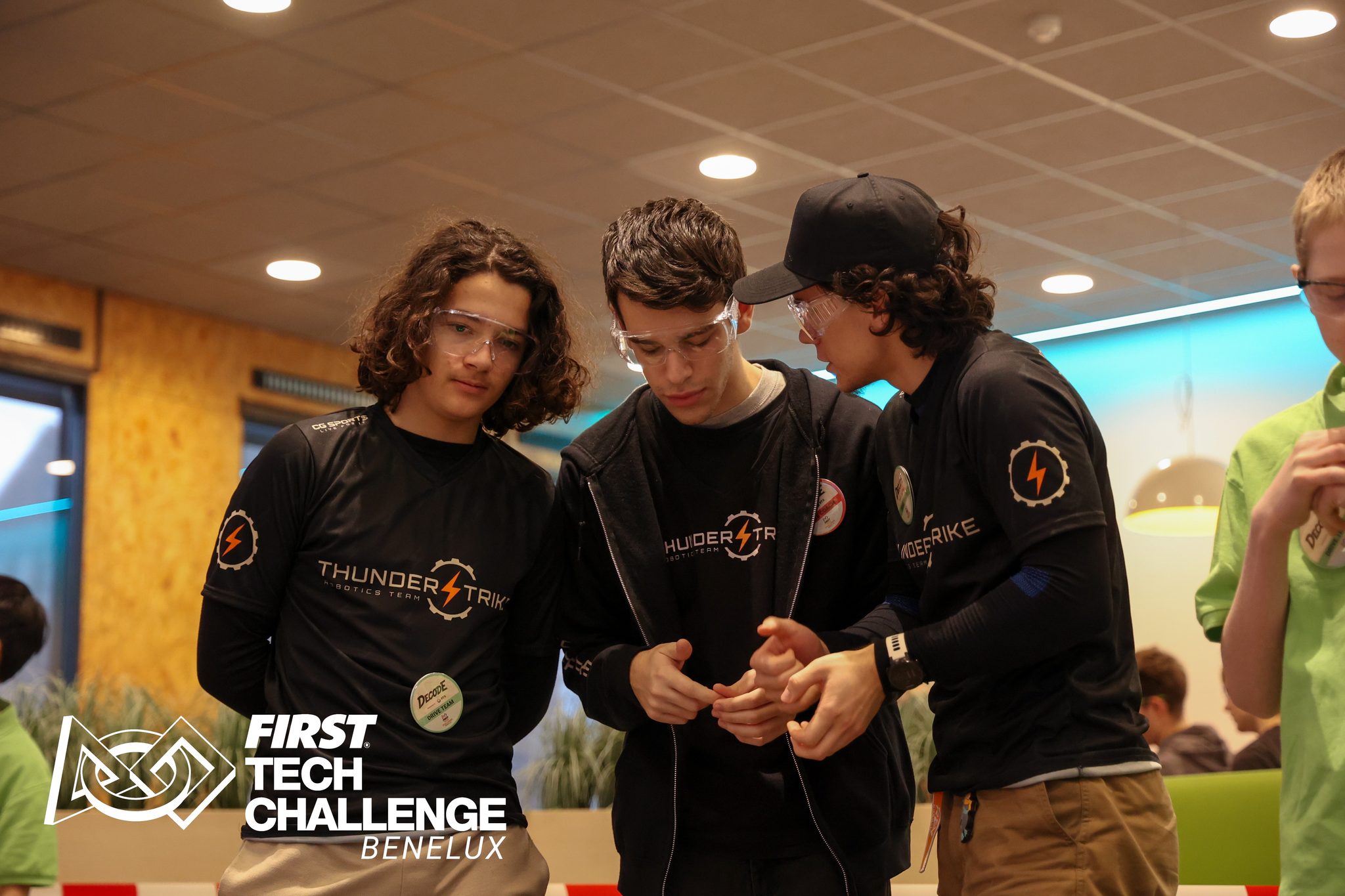
Thunderstrike is a high-performance FIRST® Tech Challenge team in Oeiras, Portugal's first. Members commit for the whole season, at least 8 hours every week. They own their part of the robot, build an engineering portfolio judged by experts, and compete across Europe:
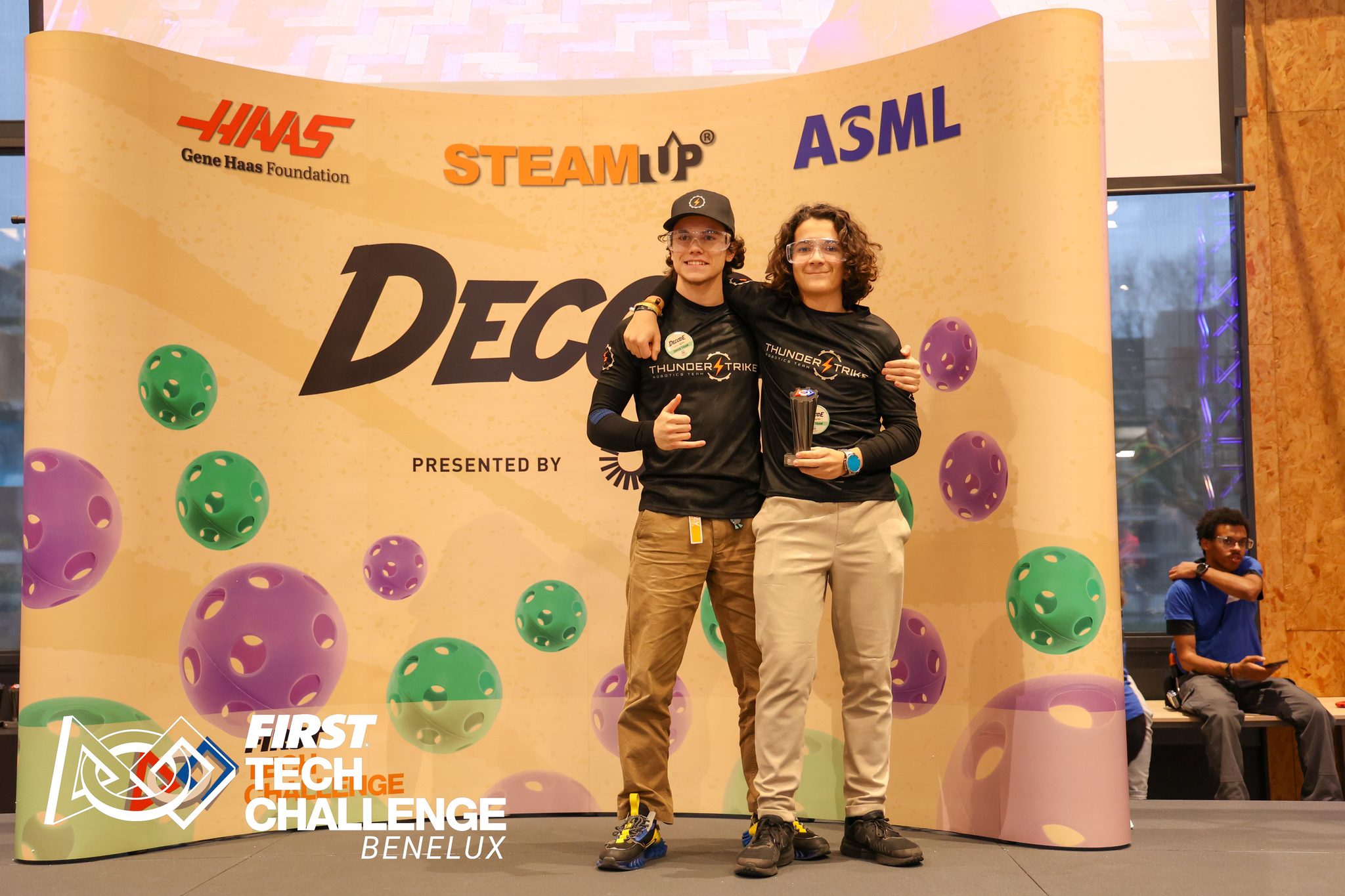
- 1st place, FTC Benelux Qualifier #5 (31 January 2026), with a Design Award.
- 6th place at the FTC Benelux Championship (7 February 2026), with the Design Award 1st place.
- Advancement to the European Premier Event (June 2026).
Grades first. Then something that shows what you can do with them. Students aged 14 to 17 who have already built something real: code, games, electronics, a machine. No FTC or FIRST® experience needed. If that is your teenager, join Team Thunderstrike.